Thoughtful ceilings. Better spaces.
False ceiling design, made easier.
Explore ideas for Indian homes, understand your material options and plan a realistic budget. Start with the room you want to improve.
Find your room
Choose a starting point, then explore the details that matter to your space.
In this guide
- Do you actually need one?
- Materials compared, honestly
- Design styles, not just materials
- Room-by-room pointers
- Lighting, fans and AC: decide before the frame goes up
- What it costs
- Choosing a contractor: five questions that matter
- Maintenance: what to expect
- When not to install one
- Frequently asked questions
- Where to go next
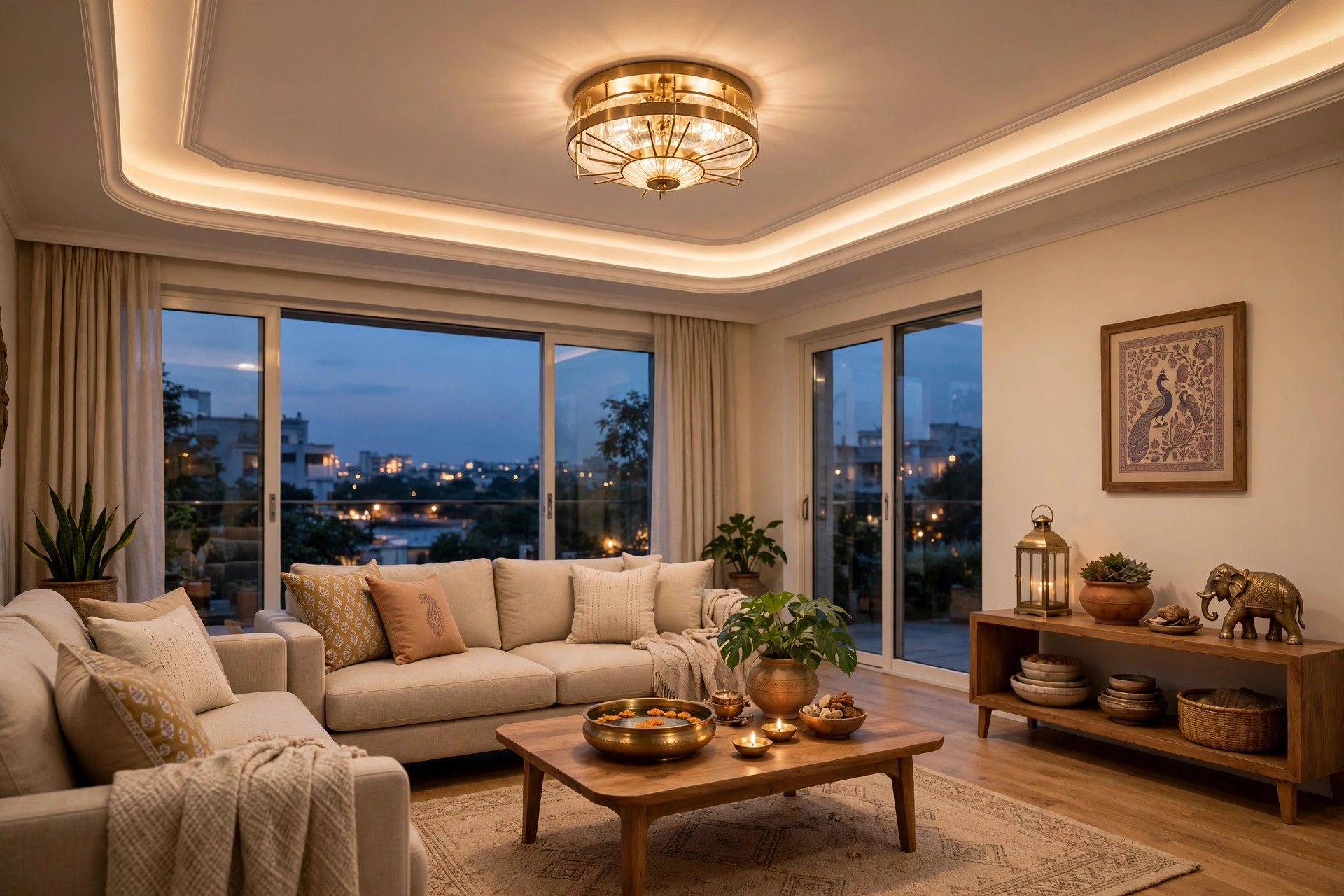
A false ceiling is a second ceiling built a few inches below your concrete slab, held up by a metal or wooden frame. The gap between the two hides wiring, pipes and AC ducts, and gives you a clean surface for recessed lights and cove lighting. Many Indian apartments have the ceiling height for one, which is why they are now common in bedrooms, living rooms, kitchens and offices.
This guide walks through the whole decision: what the options are, what each material honestly costs and where it falls short, which designs suit which rooms, and what to ask a contractor before you pay anyone. If you want depth on any single topic, each section links to a detailed guide.
Do you actually need one?
Not in every room. A false ceiling makes sense when you want hidden lighting, need to conceal ducts or wiring, or want better acoustics in a large room. It makes less sense in a small room with a low ceiling, where every inch of height matters, or in a rental where you will not recover the cost.
The deciding measurement is ceiling height. In a room with 10 feet or more, you have room to play with layered designs. Between 9 and 10 feet, keep the design shallow and flat. Below 9 feet, think twice — a deep multi-level ceiling can make the room feel cramped. If you are unsure, read the pointers on how to choose before spending anything.
Materials compared, honestly
Eight materials dominate the Indian market. They are not interchangeable, and each has a real weakness nobody puts in brochures.
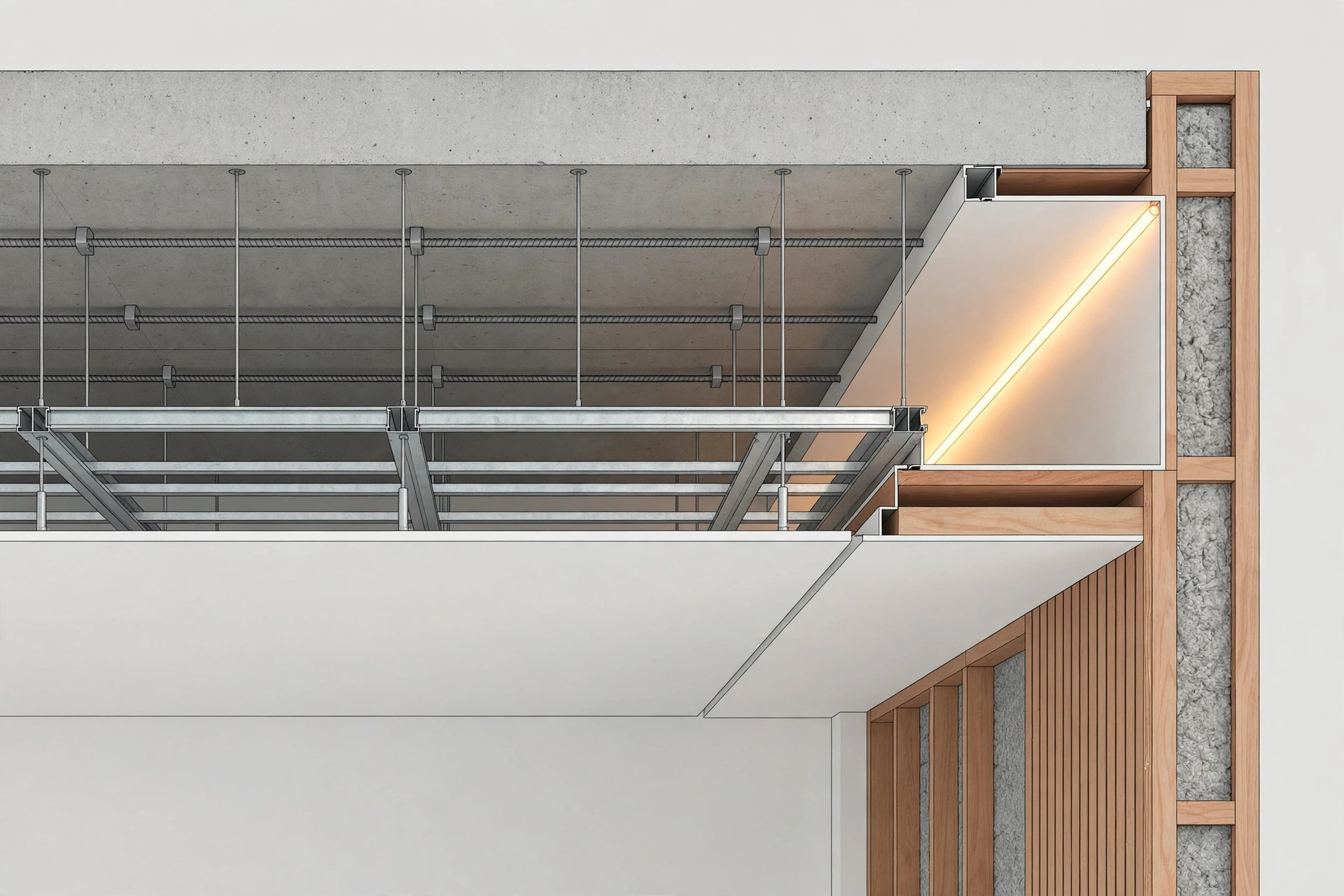
| Material | What it is | Best for | Watch out for | Indicative cost (₹/sq ft, installed) |
|---|---|---|---|---|
| Gypsum board | Factory-made boards screwed to a metal frame, joints finished smooth | Bedrooms, living rooms, large flat areas | Needs a dry room; standard boards do not like prolonged dampness | 80–150 |
| POP (Plaster of Paris) | Plaster applied by hand over a frame or mesh | Decorative curves, cornices, traditional designs | Finish depends entirely on the craftsman’s skill; can develop hairline cracks | 65–200 |
| PVC panels | Lightweight plastic panels, often interlocking | Kitchens, bathrooms, rentals | Looks plasticky up close; limited premium feel | 70–150 |
| Wood / veneer | Real wood or veneer panels on a frame | Premium living rooms, accent sections | The most expensive option by far; needs protection from moisture and termites | 120–500+ |
| Metal / aluminium | Metal tiles or linear panels on a grid | Kitchens, bathrooms, commercial spaces | Can feel cold and industrial in a bedroom | 90–300 |
| Mineral fibre tiles | Fibrous tiles laid on an exposed grid | Offices, anywhere you need ceiling access | The visible grid looks commercial, not homely | 70–250 |
| Glass | Glass panels, usually backlit | Small feature sections, showpiece areas | Heavy, fragile, priced per project — not a whole-room material | Quote-based |
| Thermocol | Lightweight foam sheets | Temporary or very low-budget ceilings | Fragile and basic; a compromise, not a choice | Budget range |
Cost bands are indicative 2026 market ranges for installed work in India, assembled from published third-party sources. They move with city, brand, finish and labour. Taxes, painting and lighting usually cost extra. Our detailed cost guide breaks down what drives the price up and how to compare contractor quotes.
A note on gypsum vs POP, since almost everyone asks: gypsum is faster to install and gives a consistent factory finish, which is why contractors suggest it for plain ceilings. POP wins when you want curves, domes or ornate traditional work that boards cannot bend into. Neither is “better” in general — it depends on the design you want. Our gypsum guide and POP guide go deeper into each.
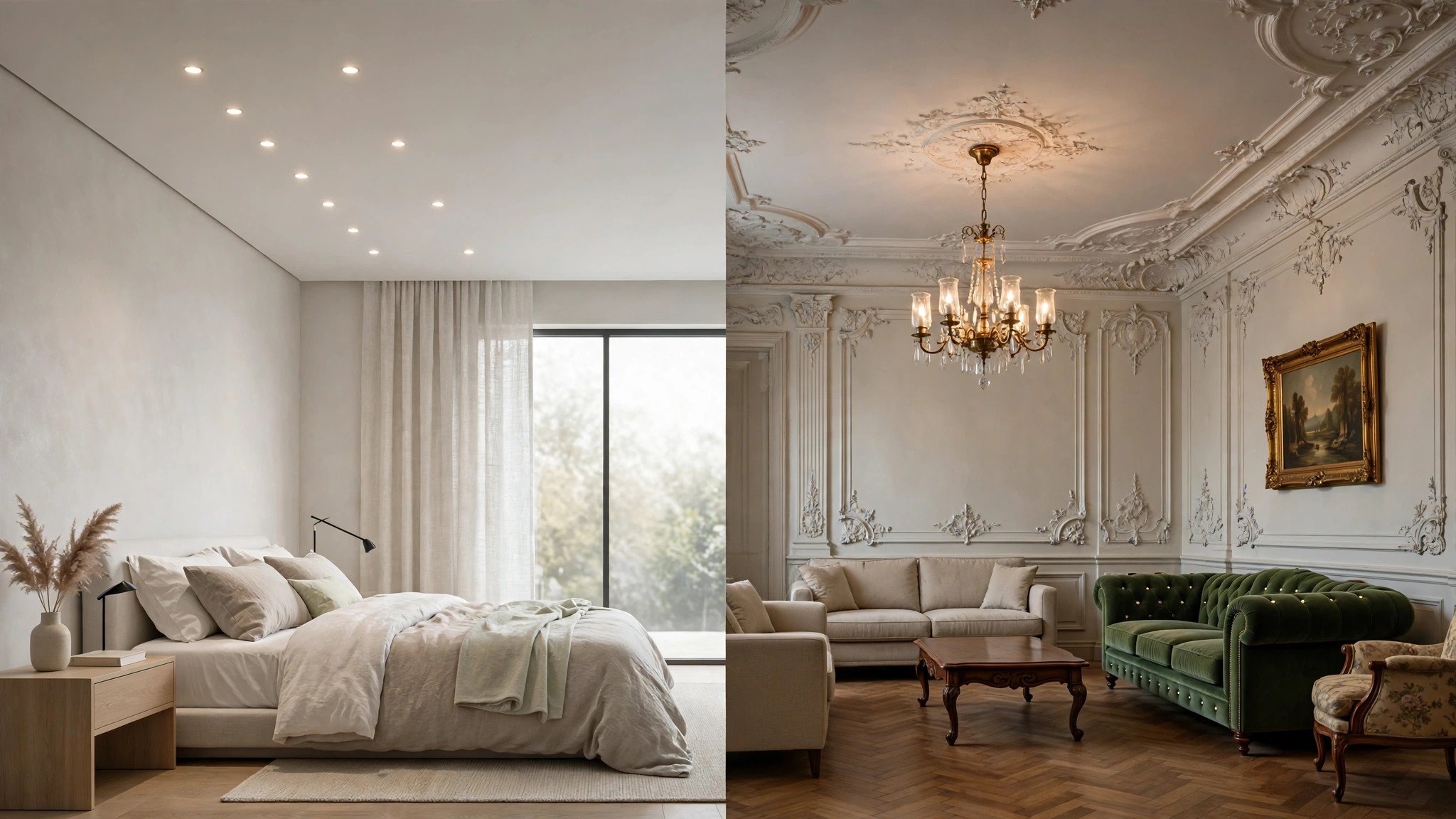
Wood deserves a straight word too. It looks rich and lasts decades, but at ₹120–500+ per sq ft installed it can cost three to five times a gypsum ceiling for the same room. Use it as an accent — a dining section, a TV wall strip — rather than wall to wall, unless the budget genuinely allows it. The wooden ceiling guide shows where it earns its price.
And thermocol: it is the cheapest way to cover a ceiling, but it dents easily and looks exactly what it costs. Fine for a temporary setup. For a home you plan to live in, the other materials are worth the difference.
For options beyond the eight main materials, see alternative false ceiling materials.
Design styles, not just materials
Material is what the ceiling is made of. Design is what it looks like. The styles below work with different materials:
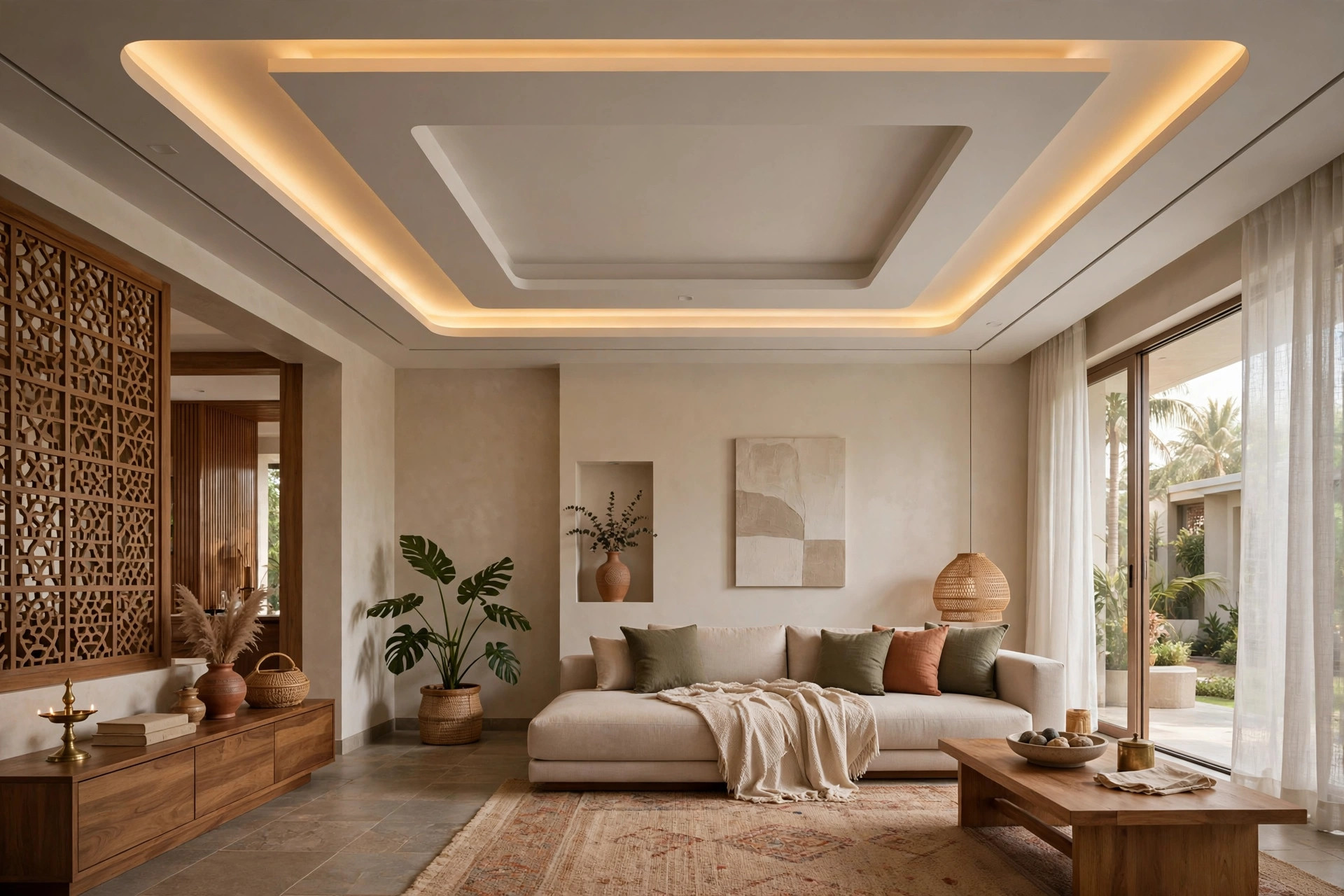
Cove ceilings hide an LED strip in a recessed ledge so light washes the walls. A widely used style in Indian homes, flattering in bedrooms and living rooms. Our lighting guide explains cove detailing, colour temperatures and driver placement.
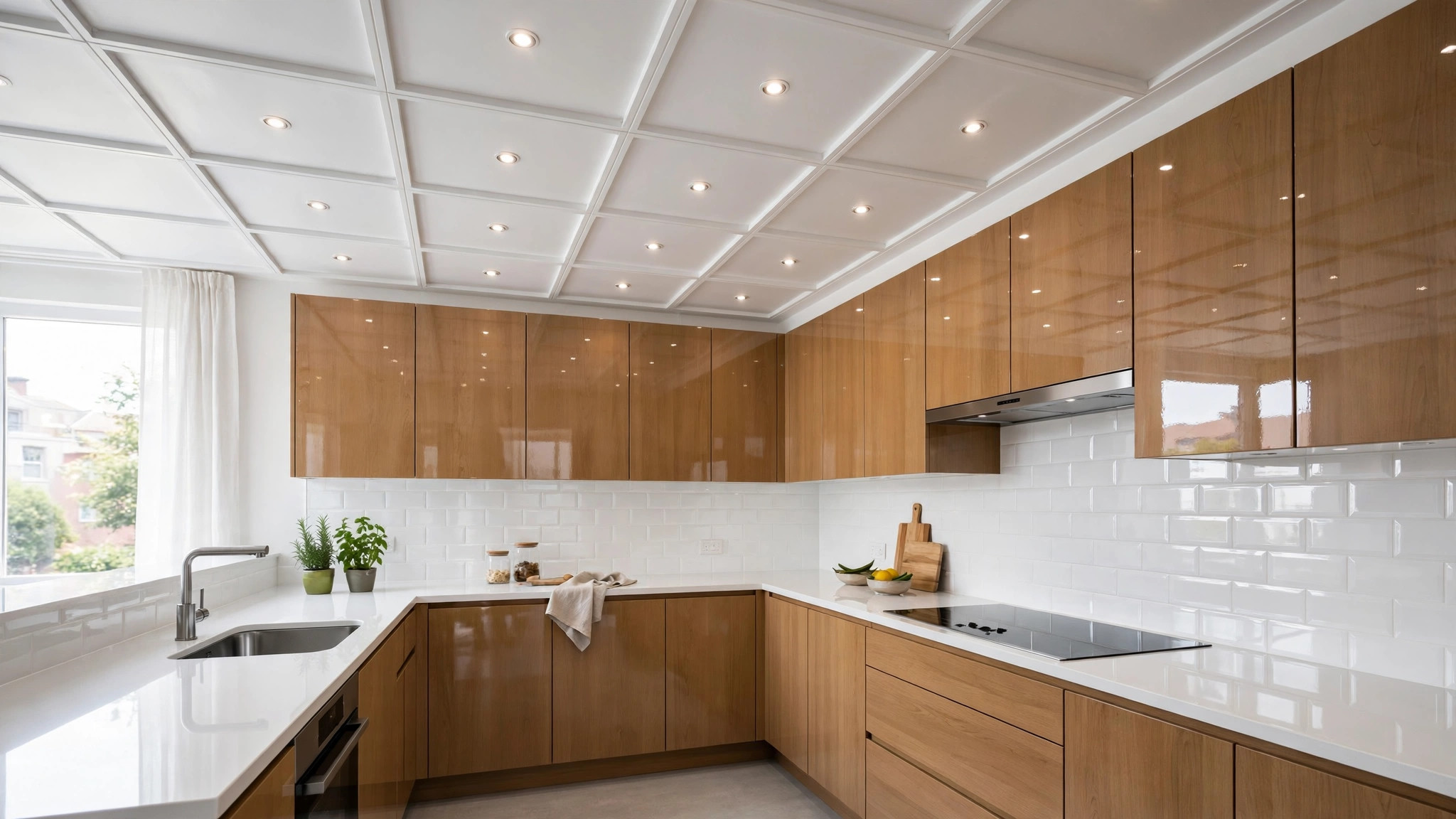
Tray ceilings step the centre up or down in one or two levels. Simple, clean, and cheaper than most people expect since it is mostly straight lines.
Backlit panels use a translucent sheet with light behind it — good for a lobby or a dining accent, too much for a whole bedroom.
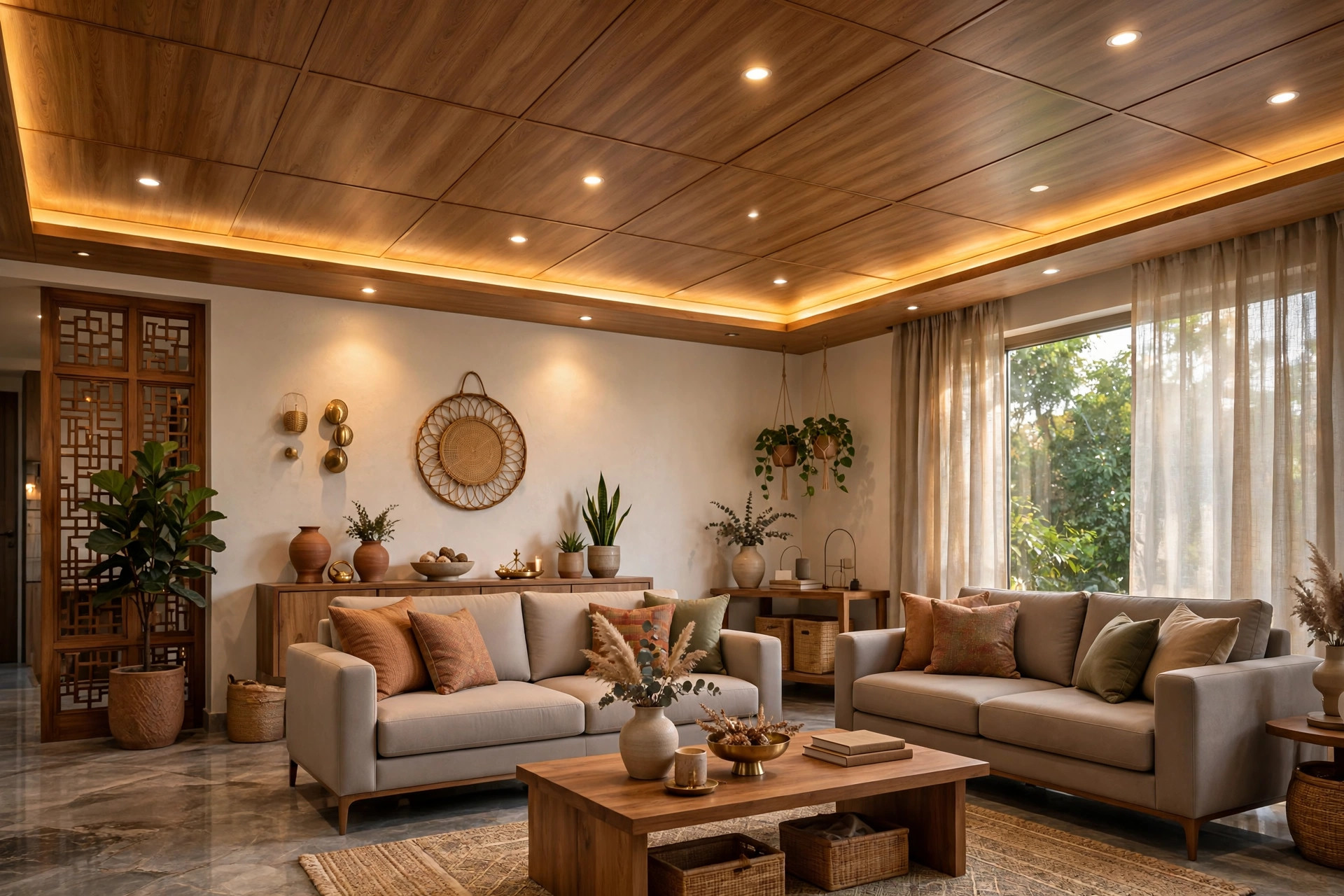
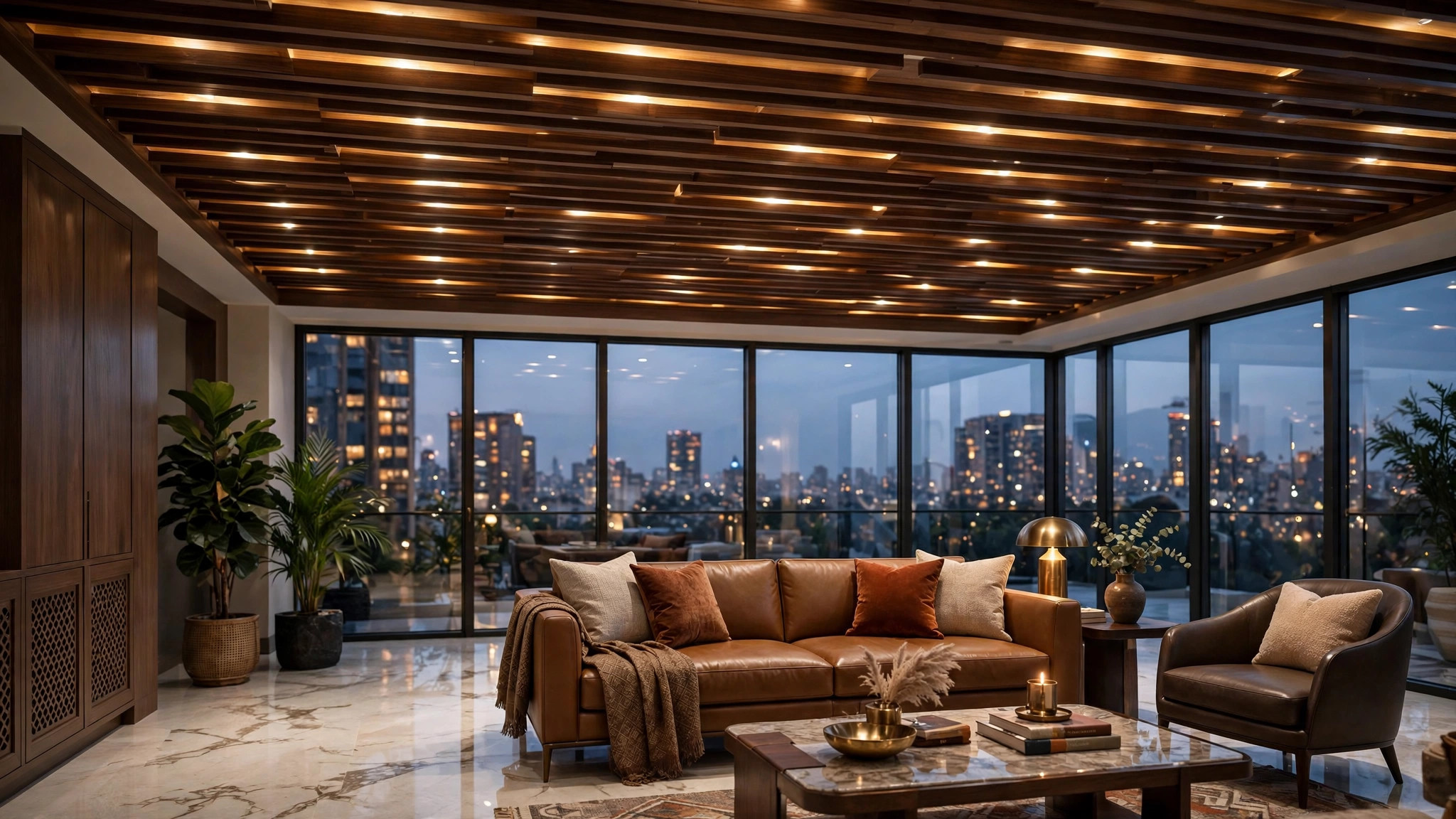
Wooden batons and rafters run slim wood strips across the ceiling. Strong look in living rooms with enough height; keep the strips shallow in low rooms.
Geometric and curved patterns — circles, waves, jaali-inspired cutwork — belong to POP’s territory, since boards do not bend that way.
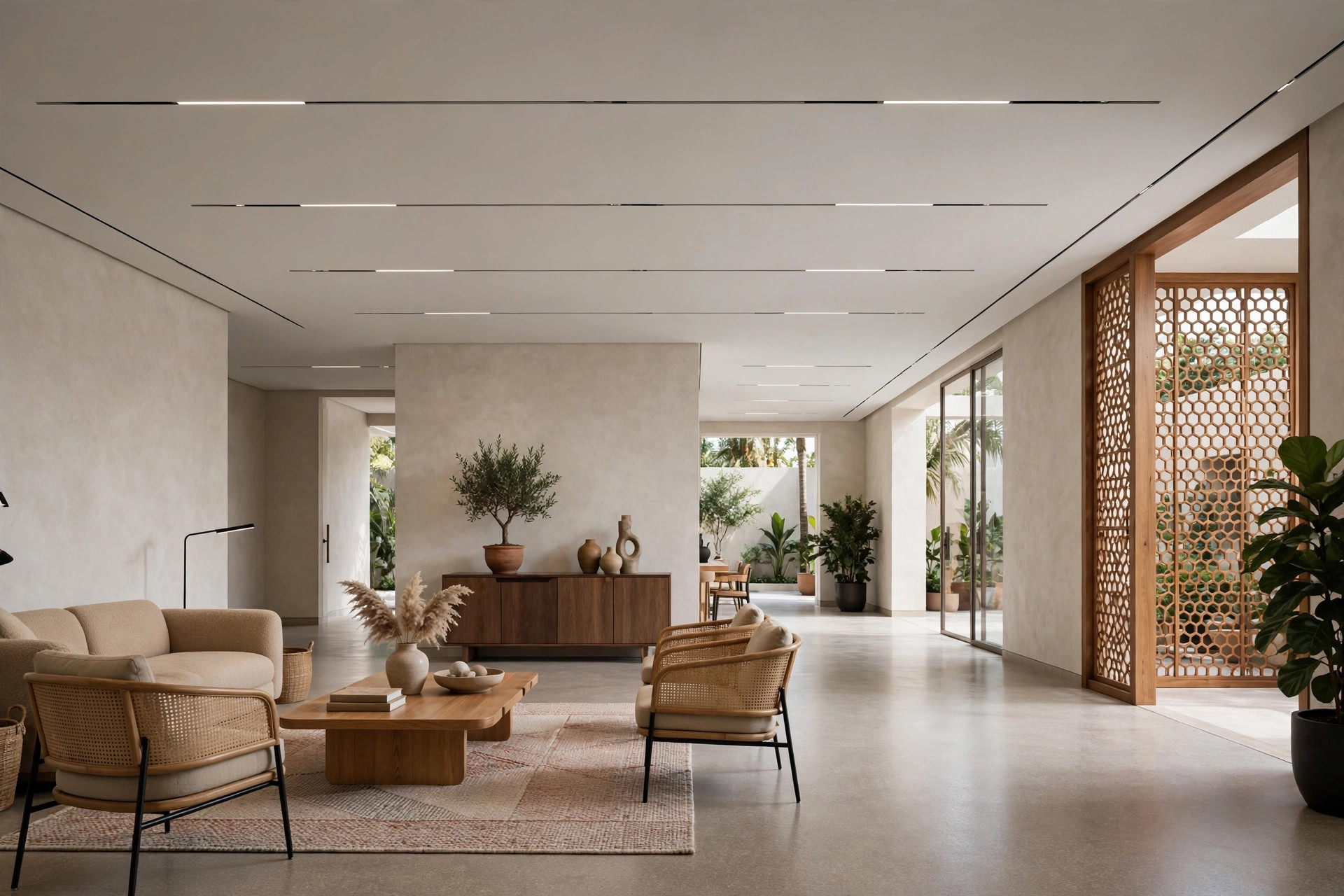
Minimal flat ceilings with a single shadow-gap line are the safest choice for low or small rooms. One clean line, no bulk.
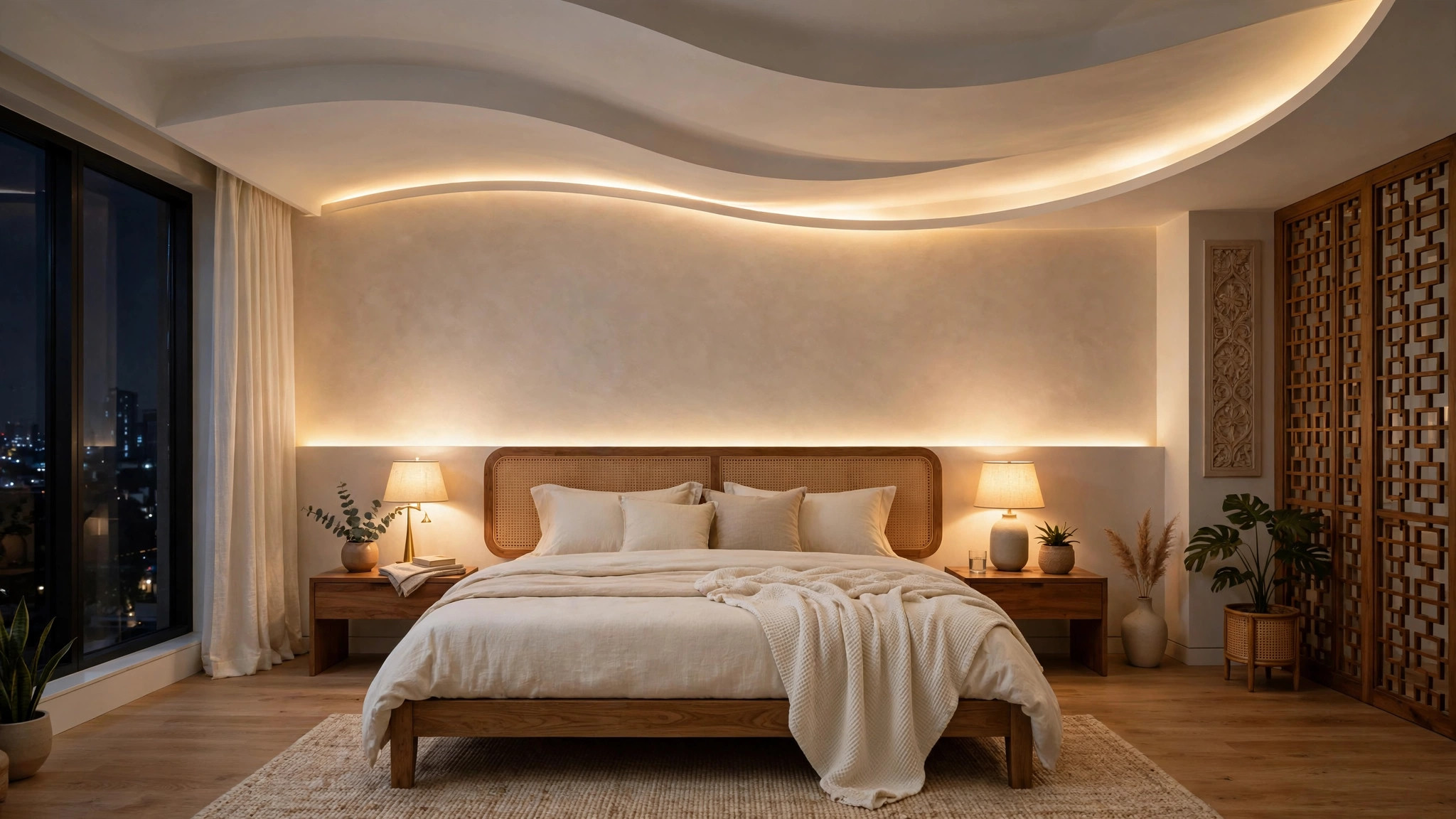
For more pattern ideas, see false ceiling shapes and patterns.
For current looks, see modern false ceiling styles.
Room-by-room pointers
Every room has one constraint that decides the material. Get that right and the rest is taste.
Bedroom. Comfort first. Gypsum with a cove border is the default for a reason — soft light, clean finish, reasonable cost. Our bedroom false ceiling guide covers layouts, fan positions and colour temperature in detail.
Living room / hall. This is the showpiece, so layered designs earn their keep here: tray ceilings, wooden accents, a statement chandelier on a medallion. See hall false ceiling designs.
Kitchen. Moisture and grease rule everything out except wipeable surfaces. PVC panels or metal are the practical picks; gypsum near a hob will suffer. Details in the kitchen false ceiling guide.
Bathroom. Same logic as the kitchen, stricter. Moisture-resistant panels, good ventilation, and sealed light fittings. The bathroom guide lists what actually survives steam.
Dining room. A tray or wooden-accent ceiling over the table anchors the space. Pendant heights matter more than the ceiling pattern — plan them together. See dining room designs.
Pooja room. Traditional POP work with a warm cove suits the mood; keep lighting warm (2700–3000K) and avoid harsh white. The pooja room guide has motifs and layout notes.
Kids’ room. Playful shapes are fine, but keep fixtures out of reach and avoid anything fragile at low height. The kids’ room guide balances fun with safety.
Home office / study. Even, glare-free light for video calls and reading. Recessed panels beat a single harsh tube light. See the home office guide.
Balcony. Only if it is covered and dry; PVC or metal, never gypsum or wood in the open. The balcony guide covers the edge cases.
Lobby / corridor. Long narrow spaces suit linear designs — a running cove or slim light line that draws the eye forward. See lobby designs.
Lighting, fans and AC: decide before the frame goes up
The most expensive mistake in false ceiling work is deciding the lighting after the frame is built. Three things to settle first:
Lights. Mark every light point — recessed spots, cove strips, pendants — on the plan before installation. Moving a point later means cutting finished boards. Warm white (3000K) for bedrooms and living rooms, neutral (4000K) for kitchens and studies. Drivers for LED strips need an accessible spot; ask where they go.
Fans. A ceiling fan needs a longer downrod once the ceiling drops, and the mounting must anchor to the slab through the false ceiling, not to the frame. Tell your contractor a fan is coming, even if you will buy it later.
AC. Cassette and ductable units sit inside the ceiling void; their vents and service access must be in the design. A wall-split AC only needs the piping route planned.
Our false ceiling lighting guide covers all of this in depth — cove construction, wiring, and what to check before the electrician leaves.
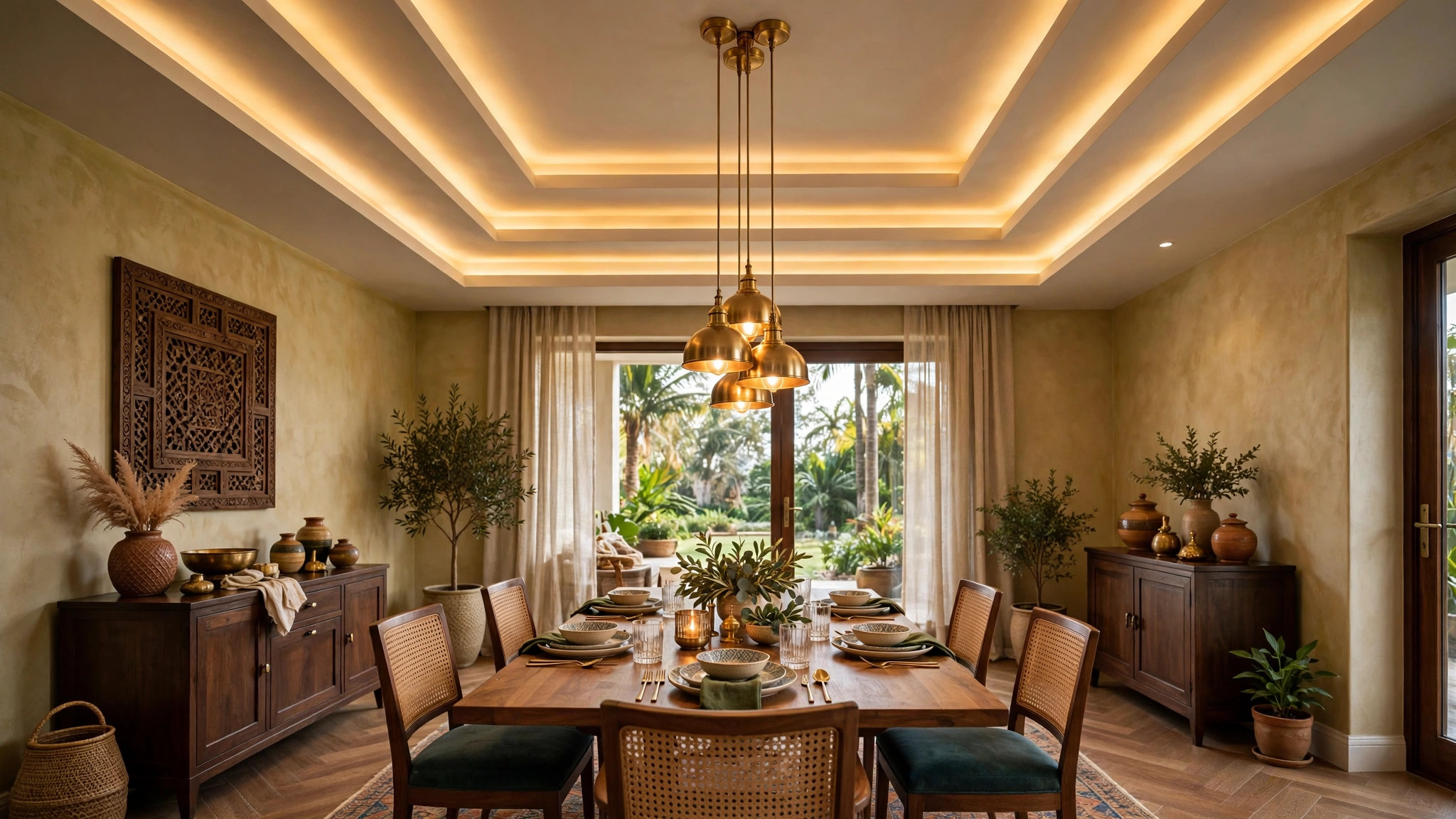
For rooms with a fan, see false ceiling designs with fans.
What it costs
For a quick sense of budget, here are the indicative installed bands again in one place: gypsum ₹80–150, POP ₹65–200, PVC ₹70–150, wood ₹120–500+, metal ₹90–300, mineral fibre ₹70–250 per sq ft. A 150 sq ft bedroom in gypsum typically lands around ₹12,000–22,500 for the ceiling itself; lighting, painting and taxes add more.
Do not stop at per-sq-ft rates. Get itemised quotes that separate material, frame, labour, finishing, paint, electricals and GST — two quotes at “₹120 per sq ft” can differ wildly in what is included. The full cost guide has a 7-question checklist for comparing quotes and the red flags in suspiciously cheap ones.
Choosing a contractor: five questions that matter
- Is the frame galvanised metal, and what is the channel spacing? (Thin, wide-spaced frames sag.)
- Which board/panel brand and thickness are you quoting? (Get it in writing.)
- Does the quote include jointing, sanding, primer and paint — or just installation?
- How do you handle light points, fan anchoring and AC access?
- What is the payment schedule, and what is covered if cracks appear in the first year?
A contractor who answers these plainly is usually a safer bet than one who only talks about designs.
Maintenance: what to expect
A well-built gypsum or POP ceiling needs little: repaint every 4–6 years like walls, wipe PVC or metal panels with a damp cloth. Watch for brown patches — they mean water is reaching the ceiling from above, and paint will not fix that; find the leak first. Keep one access panel wherever valves, drivers or AC dampers hide, or servicing becomes demolition.
For fitting and upkeep advice, see false ceiling installation and maintenance.
When not to install one
Skip it if the ceiling is under 9 feet and the room is small, if you rent and will move in two years, or if the budget only stretches to the cheapest quote you found. A bad false ceiling — sagging frame, visible joints, flickering cove — is worse than a clean painted slab. There is no shame in plain ceilings; most well-lit rooms do not need more.
Frequently asked questions
A simple flat design takes about 4 inches; layered designs with cove lighting take 6–8 inches. Measure your slab-to-floor height first and work backwards.
Gypsum with a cove border suits most bedrooms — clean finish, soft light, mid-range cost.
Yes, for the ceiling. It wipes clean and ignores steam. It will not look premium, but in a kitchen practicality wins.
Yes, but the fan must anchor to the concrete slab above through the ceiling, using a longer downrod. Never hang it from the frame alone.
A single room typically takes 3–7 working days depending on material and design complexity; POP takes longer because plaster needs drying time.
The air gap gives some insulation, which can make a top-floor room marginally cooler. Do not buy one for insulation alone — the effect is modest.
Thermocol is cheapest, PVC panels are the cheapest reasonable option for a lived-in home. Below a point, cheap means redoing it sooner.
Where to go next
If you know your room, start with its guide — bedroom, hall, kitchen, bathroom, dining, pooja, kids’ room, home office, balcony or lobby. If you know your material, start there — gypsum, POP, PVC, wood, metal, glass, thermocol or mineral fibre. And if budget is the question, the cost guide and the lighting guide answer the two things people ask about most after the design itself.
If you are still deciding, see how to choose a false ceiling.
For workspaces, see office false ceiling designs.
For larger premises, see commercial false ceiling designs.